An Etsy seller came to the company’s community page, sad about her losing money on her first couple of sales because even shipping a bar of soap through Canada Post cost $13. Was she at fault?
The answer is yes and no. No, because the shipping costs do seem unfair, and yes, because that could have been avoided if she had known how to mail a package in Canada properly, and that involves looking at the alternatives.
Even Canada Post admits it. In a press release posted on April 20, 2026, Canada’s largest carrier company admitted that customers have started moving to other carriers for stability and labour uncertainty, leading to Canada Post facing a parcel volume fall of 79 million pieces.
Beyond the options, there are steps, and beyond the steps, there are mistakes to avoid. This guide gives a complete view of how to get a package from point A to point B in Canada, while saving money and being timely.
What You Need Before You Mail a Package
What do I need to mail a package? If that is your question, then the answer lies in four basic steps, and getting the address right.
The first thing that you need is a box or an envelope built to handle the size and structure of the item you want to send.
The second thing you need is a strong packaging material. It could be bubble wrap if it is electronics, packing paper if it is light cosmetics, or air pillows if it is a heavy parcel that you need to protect from the bumps on the road, or in the air.
The third element is packaging tape, keeping the entire package together so that there is no spillage during the transport.
And finally, you need a way to weigh the item. Don’t worry if you don’t have a scale at your facility. Most couriers, including Canada Post, weigh and measure the package before sending.
Once those four standards are met, the final element that’s left is the address. The package should have the following details in regard to the destination.
- Recipient’s full name
- Complete street address
- Postal code
- Recipient’s phone number, in case of a delivery issue
- Your own return address
Getting any of the first four things wrong could lead to misdelivery, and forgetting to put your own address on the box may just anger your customer, leading to returns. Therefore, getting the address, and the package, right is an essential prelude to mailing the package in Canada.
How to Mail a Package in Canada: Step-by-Step
The following is the step-by-step guide to how to mail a package in Canada.
Step 1: Choose the Right Box or Envelope
You should choose the box or envelope that is snug enough to stop the item from moving around inside. It should be sturdy enough to handle the weight of the package, and it should leave enough room to cushion the item.
Step 2: Pack the Item Securely
Place the cushioning materials inside the empty space before adding the item. It will work as a test run, showing you whether the item moves around before you mail it. Put packing tape at every seam, not household tape. Even slight moisture makes the household tape lose its adhesive quality, which can loosen the package.
Step 3: Weigh and Measure the Package
You can either weigh and measure the package at home, which is advisable if you want to truly keep all the cost considerations up to the mark. Or, you can let the post office or the carrier do it if you are unsure. Even if you do weigh the package, however, couriers will weigh it from their end too. You can think of it as the confirmation of the measures you took.
Step 4: Choose a Mailing Service
Pick a mailing service based on how fast you want it to be delivered, and how much you are willing to pay. Your options include Canada Post’s Regular Parcel, Expedited Parcel, Xpresspost or Priority. You can also choose any courier service that offers the same, if not better service. Check out our guide to how to ship a package through Canada Post here for more information.
Step 5: Address the Package Clearly
Write or print the full address of the recipient and the postal code on the package. Also put your return address in the top-left corner to ensure that the recipient knows who to thank, or to hold accountable, depending on the condition of the package.
Step 6: Pay the Postage and Get a Shipping Label
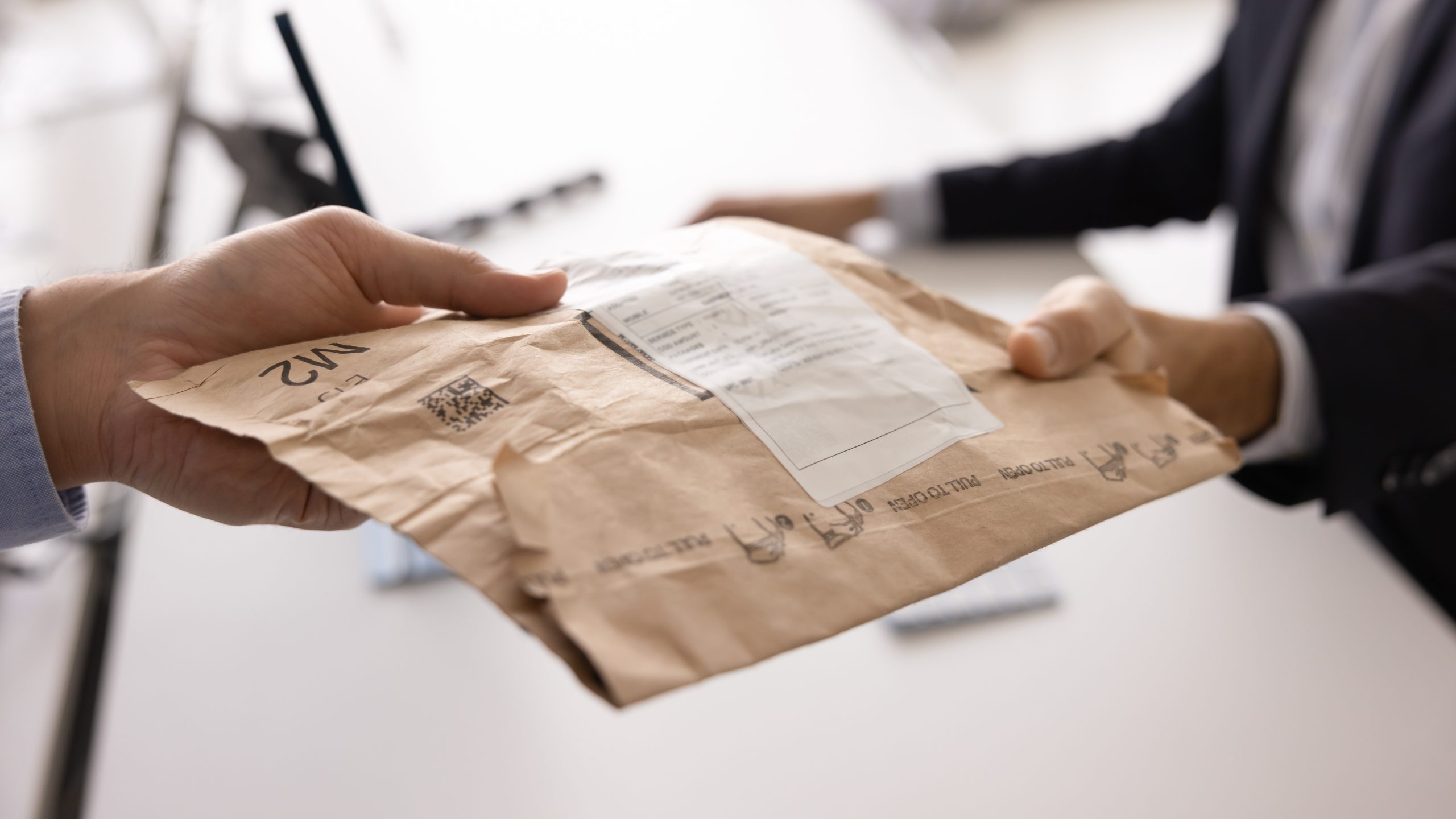
You can buy the shipping label online and print it at home before sticking it to the package, or buy it when you are taking the package to the courier and stick it on the package right then and there. Without postage, no carrier will accept the package to ship it.
Step 7: Drop off the Package
Finally, drop the package off at a post office, a retail outlet or an authorized drop box. If the package volume or package size is high, schedule a pickup for the carrier to reach out to you, and pick up the package before sending.
How Much Does It Cost to Mail a Package in Canada?
The cost to mail a package depends on how heavy the package is (weight), the dimensions of the package, distance between the sender and the recipient, and the speed of the service. The distance metric is now more important than it used to be, especially since Canada Post has expanded its parcel rate codes from 45 to 128 while keeping the weighted average price change for domestic parcels just below 1%.
Canada Post rate calculator known as Find a Rate, offers precise details about the distance-specific pricing structure.
It means that sending the same box can cost noticeably different amounts depending on where it is going.
Here is the cost-tier framework to keep in mind:
- Lightweight letters and small parcels are the cheapest objects to ship
- Regular Parcel is the most economical for sellers wanting to mail a box
- The most expensive modes to ship are Xpresspost and Priority. Priority is Canada Post’s fastest option. Xpresspost promises a next-day or 2-day tier with an on-time guarantee.
But don’t assume that the cost-tier framework will work as planned depending on the frequency of shipping. A seller on the eBay.ca forum admitted that regularly shipping parcels of a few kilograms costs more when they picked Regular Parcel as compared to Expedited for those shipments. The key is to compare every service of every shipping service provider before mailing the package.
Other options are flat rate boxes that have a predictable price regardless of the item’s weight, and the cost often depends on the weight limit.
Choosing the Right Mailing Service for Your Package
What is the best way to mail a package in Canada? It depends on two things: how fast the package needs to arrive, and how closely you want to track it on the way. Canada Post offers four domestic options, and each one sits at a different point between price and speed.
| Service | Speed | Tracking | Typical Use Case |
| Regular Parcel | Longer delivery window | Yes | Non-urgent domestic shipments; most economical |
| Expedited Parcel | Faster than Regular | Yes | Ground shipments that need more reliability |
| Xpresspost | Next day to 2 days | Yes, with on-time guarantee | Time-sensitive parcels |
| Priority | Next business day between major urban centres | Yes | Fastest domestic option |
You can find the full details of each service on Canada Post’s mailing and shipping services page.
Canada Post isn’t the only postal service in the country, though. Couriers like UPS, FedEx and Purolator can be a better way to send a parcel in three situations.
The first is very heavy items. Canada Post caps parcel weight and size, and couriers are often better set up for heavier loads.
The second is guaranteed same-day or overnight delivery in specific corridors, such as between two major cities where a courier runs dedicated routes.
The third is volume. If you are a business shipping dozens of orders a week, couriers offer volume-based commercial rates that a single sender at the counter never gets.
The key is to match the service to the package, not the other way around. A birthday gift and a customer order with a promised delivery date rarely need the same option.
Where to Mail a Package From
Where can I mail a package? You have four options, and the right one depends on the size of the package and how often you ship.
- The first is a post office outlet. This is the safest bet for first-time senders, since the staff can weigh the package, help you pick a service and sell you the label on the spot.
- The second is an authorized retail postal outlet. You will find these inside some pharmacies and convenience stores, and they are often closer to home than the nearest post office.
- The third is a street mailbox. It works only for prepaid items small enough to pass as lettermail, so don’t try to push a parcel through the slot.
- The fourth is a scheduled pickup from your home or business. Instead of you going to a drop-off location, the carrier comes to you.
A pickup makes more sense than a drop-off in three cases. You ship on a recurring basis, the item is too bulky to carry to the counter, or your business processes several orders a day. In each case, trips to the post office start eating into time you could spend selling.
For sellers who ship regularly, services like ShippingChimp offer free pickup, so packages leave your door without you ever standing in a post office line.
Common Mailing Mistakes to Avoid
Most mailing package mistakes happen before the package ever leaves your hands. Canada doesn’t publish how much of its mail goes undelivered, but US data gives a sense of the scale. The USPS Office of Inspector General found that almost 6.8 billion pieces, or 4.3% of US mail, couldn’t be delivered as addressed, and processing that mail cost $1.5 billion in FY 2013.
Here are the mistakes to watch out for:
- Using a box that’s too large. It wastes packing material, and under dimensional weight pricing, you pay for the space even if the item is light.
- Under-packing fragile items. Without enough cushioning, the contents shift in transit and arrive broken.
- Writing an illegible or incomplete address. This is one of the most common causes of delays and returns. A reader in Walkerton, Ontario wrote to his local paper about a birthday card from his sister that had his full address but no box number. It went back to her in Scotland, and she paid about $4 more to send it across the Atlantic again. One missing line meant two international trips.
- Forgetting the return address. Canada Post returns undeliverable items only when there’s a valid return address. Otherwise, it opens the package, and if it holds merchandise with no address to be found, Canada Post sells it and keeps the money.
- Ignoring prohibited and restricted items. Batteries, liquids and certain other goods can delay or block a shipment at the carrier’s discretion, so check Canada Post’s restrictions list before you pack.
FAQ
How much does it cost to mail a package in Canada?
The cost to mail a package in Canada depends on four things: the weight of the package, its dimensions, how far it has to travel and how fast you want it there. A small, light box going across town will cost far less than a heavy one going from Halifax to Vancouver. Regular Parcel is generally the most economical option for non-urgent domestic shipments, since you trade speed for a lower price. Xpresspost and Priority cost more because they put your package on a faster track. Canada Post updates its rates periodically, so any figure you saw last year may already be outdated. For an exact quote, enter your package details into a current shipping calculator or the rate tool on canadapost.ca before you head to the counter.
Can I mail a package without a box?
Yes, but only for some items. Padded envelopes and poly mailers work well for soft, non-fragile goods like clothing, fabric, books and documents. They are lighter than boxes, take up less space and can bring the shipping cost down, which makes them a favourite among apparel sellers. A box is still the safer choice for anything fragile, oddly shaped or heavier than a padded envelope can safely hold. Glassware, electronics and cosmetics in glass bottles need rigid walls and cushioning around them, which an envelope can’t give. A simple test is to press on the package from all sides. If the item inside could bend, crack or poke through, it needs a box. If it can take a squeeze without harm, an envelope or mailer will do the job.
Do I need to weigh my package before mailing it?
No, you don’t. If you don’t have a scale at home, most post offices and carrier counters will weigh and measure your package when you drop it off or buy postage. The counter staff will then tell you what each service costs based on those numbers. That said, knowing the approximate weight in advance has its advantages. It helps you pick the right service before you leave home, estimate the cost through an online calculator and spot pricing differences between carriers. It also matters if you want to buy a label online, since the label price depends on the weight and dimensions you enter. A basic kitchen or luggage scale is enough for most packages. If you ship regularly, a small shipping scale is worth the investment.
How long does it take to mail a package in Canada?
How long it takes to mail a package in Canada depends on the service you choose and the distance the package travels. Regular Parcel is the slowest option, taking a few business days for local deliveries and longer for packages crossing the country. Expedited Parcel moves faster and comes with tracking. Xpresspost generally delivers in one to two business days, with an on-time guarantee. Priority is the fastest, aiming for next-business-day delivery between major urban centres. Keep in mind that these timelines count business days only, so weekends and holidays don’t count toward the delivery window. Remote and rural destinations can also take longer. For an exact estimate, check Canada Post’s delivery standards tool using your postal code and the recipient’s.
Can I print a shipping label at home?
Yes, you can. When you buy postage online through Canada Post or a courier’s website, you get a shipping label to print at home. Stick it flat on the largest side of the package, and make sure the barcode isn’t wrinkled or covered so it scans cleanly. Once the label is on, you can schedule a pickup or drop the package off at a post office, retail outlet or other authorized location. Printing at home also saves you time at the counter, since the postage is already paid and there is nothing left to calculate. If you don’t have a printer, that’s not a problem either. You can buy the label in person at a post office or retail postal outlet and apply it right there.
What is the cheapest way to mail a package in Canada?
Regular Parcel is generally the cheapest Canada Post service for non-urgent domestic shipments. If the package doesn’t need to arrive by a certain date, it’s usually the first option worth checking. For heavier items, flat rate boxes can be the better deal. You pay a fixed price regardless of the exact weight, as long as the item fits inside the box and stays within its weight limit. That makes them useful for dense items like books, tools or kitchenware. Don’t stop at the first price you see, though. Some sellers have found that Expedited Parcel comes in cheaper than Regular Parcel for certain routes and weights. The cheapest way to mail a package is the one you find after comparing every service, and every carrier, for that specific shipment.
Do I need ID to mail a package?
For most standard parcels, no. You can walk into a post office, pay for postage and hand over your package without showing any identification. Some services are different, though. Picking up mail that’s being held for you, sending Registered Mail and certain commercial arrangements may require government-issued photo ID. The same goes for deliveries that need a signature or proof of age, where the recipient may have to show ID even if you, as the sender, didn’t. Requirements also vary between carriers and can change over time, so check the specific service before you head out. When in doubt, carry a driver’s licence or another photo ID with you. It costs nothing to have it, and it may save you a return trip.

- How to Mail a Package in Canada: Step-by-Step - October 21, 2026
- How Long Does Express Shipping Take? A Carrier-by-Carrier Breakdown - October 12, 2026
- Best Shipping Companies in Montreal (2026 Guide + Top Picks) - October 12, 2026