Shipping is expensive in Canada because Canada is vast in geography and sparse in population. Extreme weather adds to fuel and hazard costs, and limited carrier competition lets carriers be liberal about rates. Cross-border customs requirements at the country’s edge are complex. Fuel costs are pushed up, labour costs are high, and when carriers pass these costs to sellers, shipping becomes pricey.
Why Is Shipping Within Canada So Expensive?
If you’ve ever wondered why is shipping so expensive in Canada, the answer lies in a mix of geography, infrastructure, and market structure that most sellers don’t account for until the invoices start piling up. Here are the reasons behind the high cost of shipping in Canada.
Expansive and Diverse Geography
Canada’s sheer size and varied terrain make transit genuinely difficult. Long distances and scattered regions push fuel costs up, since vehicles must cover far more ground per delivery. This geographical reality complicates logistics and drives up the cost of doing business nationwide.
Dispersed Population
Beyond its size, Canada’s population is thinly spread across that vast landmass. Fewer people per route means fewer delivery centers to serve them, which pushes per-unit transportation costs higher. Carriers end up running longer routes for smaller returns.
Harsh Weather Conditions
Many regions face extreme winters, heavy snowfall, and unpredictable storms that disrupt transportation for weeks at a time. These conditions cause delays, spike fuel consumption, and add handling expenses. Adjusting logistics around seasonal weather is essential to controlling costs and keeping delivery timelines intact.
Distance from Major Markets
Canada sits relatively far from many of the world’s major marketplaces, and that distance adds up fast. Shipping to and from the country often means higher transit costs, longer delivery windows, and extra regulatory steps. This isolation is a structural cost sellers can’t fully engineer around.
Logistical Challenges
Remote and vast areas create real bottlenecks: slower transit times, longer alternative routes, and limited infrastructure in general. Sellers need solid strategies and reliable logistics partners to work around these gaps. Strong customer service in underserved regions also goes a long way toward retaining customers despite the friction.
Customs Procedure and Border Clearance
Complex customs paperwork and compliance requirements slow shipments down and add cost at every stage. Delays at the border often mean higher storage fees and, in some cases, penalties. Getting the documentation right the first time is one of the simplest ways to avoid unnecessary expense.
Fuel Cost
Longer shipping distances mean more fuel burned per delivery, and that cost doesn’t stay with the carrier for long. Rising fuel prices drive up carriers’ operational costs, which they typically pass straight to the seller. Tracking these costs closely is key to keeping a logistics budget under control.
Import/Export Taxes and Tariffs
Cross-border shipments come with their own layer of expense: import/export taxes and tariffs that vary by product and destination. Sellers who understand these tariff systems upfront can price and plan more accurately. That awareness translates directly into smoother operations and a more competitive offering.
Limited Carrier Competition
Canada simply has fewer parcel carriers than the US, and that thinner market leaves less pressure on pricing. Canada Post holds a near-monopoly on last-mile delivery to rural and remote areas, meaning sellers often have little room to negotiate better rates. This lack of competition is one of the most overlooked reasons behind high domestic shipping costs, and one worth understanding before you commit to a single carrier.
It’s often more revealing to compare Canadian carrier rates side by side than to assume any one provider offers the best deal for your shipping profile.
How Much Does Shipping Cost in Canada?
Understanding shipping costs Canada wide starts with knowing what the major carriers actually charge for a standard delivery. Rates vary quite a bit depending on the carrier you choose, the delivery speed you need, and how far the package has to travel.
Below is a quick look at the tentative rates from some of Canada’s leading carriers. These figures should give you a realistic starting point for budgeting your shipments.
| Shipping Service | Starting Price | Delivery Time |
| Canada Post – Regular Shipping | CA$ 12.99 | Between 2 & 9 business days |
| FedEx SmartPost | CA$ 14.99 | Between 2 & 8 business days |
| FedEx Ground Shipping | CA$ 21.95 | Between 1 & 7 business days |
| DHL eCommerce | CA$ 14.99 | Between 2 & 5 business days |
| Purolator Ground Shipping | CA$ 14.95 | Between 1 & 7 business days |
| UPS Ground Shipping | CA$ 19.95 | Between 1 & 5 business days |
You can choose from any of these carriers based on their rates, delivery timelines, and what fits your budget best.
Note: Prices are for a 500g parcel; verify at time of publication.
How to Reduce Shipping Costs in Canada
Streamlining your shipping process can save real money and boost the profitability of your eCommerce business. If you want a deeper breakdown, this guide on the cheapest way to ship within Canada is worth bookmarking. Here are six practical ways to cut costs.
Negotiate Pricing with Shipping Carriers
You can negotiate rates directly with carriers like Canada Post, FedEx, UPS, and DHL to lower your shipping expenses. Consolidating shipments often unlocks volume-based discounts, and collecting quotes from multiple carriers gives you real leverage to bargain. Long-term partnerships with private shipping platforms can also secure highly discounted rates over time.
Take Advantage of Regional Fulfillment Centers
Positioning your inventory through regional fulfillment centers helps manage shipping expenses strategically. Storing stock closer to key customer bases shortens shipping distances and lowers transit costs. Beyond faster delivery and reduced costs, this approach also improves overall customer satisfaction.
Do Efficient Packaging
Efficient packaging lets you manage shipping costs by adjusting box dimensions and materials to match the product. The right packaging size minimizes wasted space and keeps overall shipping charges in check. This is one of the simplest changes a seller can make with immediate savings.
Use a Shipping Aggregator or Platform
Shipping aggregators and platforms give sellers access to pre-negotiated carrier rates without requiring high shipping volumes. Instead of negotiating separately with every carrier, you get competitive pricing bundled into one platform. This route works especially well if you’re exploring the cheapest shipping options for small business, since it removes the volume barrier that usually keeps smaller sellers locked out of better rates.
Reduce DIM Weight Through Right-Sized Packaging
Dimensional weight, or DIM weight, is calculated using a package’s volume rather than its actual weight, and it can quietly inflate shipping bills. Choosing packaging that closely fits the product reduces this calculated weight and avoids paying for unused space. Sellers who audit their packaging regularly often find this is one of the fastest ways to trim recurring shipping costs.
Zone-Skip by Storing Inventory Closer to Customers
Zone skipping means positioning inventory nearer to your customer base so shipments bypass multiple pricing zones altogether. Since carrier rates typically rise with each zone a package crosses, cutting down that distance directly reduces per-shipment charges. Combined with regional fulfillment strategies, zone skipping is particularly effective for sellers shipping to distant provinces.
Applying even a few of these strategies consistently can make a measurable difference in your annual shipping spend, and free up margin to reinvest in growing your business.
Why Is Shipping from the US to Canada So Expensive?
Why is shipping from US to Canada so expensive? A legit question, considering the vicinity of the two nations. Here are the main reasons:
Transit Cost
Packages crossing the US-Canada border by ground or air rack up transit costs that reflect the distance covered. These costs include fuel, vehicle maintenance, labor, and other operating expenses tied to moving freight across two countries. The longer and more complex the route, the higher the transit charge.
Conversion from US Dollars to Canadian Dollars
Currency conversion from USD to CAD directly affects the final shipping cost. Favorable exchange rates stretch your money further, while unfavorable ones make shipping more expensive after conversion, and many financial processors add a fee on top of the exchange itself.
Brokerage Fees
Brokerage fees cover documentation, customs clearance, and import compliance, all of which add to the total shipping cost. These fees are usually based on a package’s declared value and vary by carrier and customs process.
Tariffs
Tariffs are import duties the Canadian government charges on shipments, and the amount owed depends on the item’s value and classification. For instance, a $10,000 clothing shipment from the US could face an import duty of 16 to 18%, and customs will notify the customer or courier of the amount owed. (Note for publication: US-Canada trade tensions through 2025 and 2026 have added real uncertainty to cross-border tariff rates, so figures should be verified against current trade policy before this goes live.)
Peak Season Rush
Holiday periods like Christmas and New Year’s bring a surge in orders as customers shop for gifts. This spike in volume puts pressure on carriers, often driving shipping costs higher during peak weeks.
Planning around these cost drivers gets easier once you know your options. For a full breakdown, take a look at these cheapest Canada to US shipping options.
A Better Way to Ship in Canada with Discounted Rates
The one overlooked answer to the question: why shipping is expensive in Canada, is that most sellers ship without access to negotiated rates. Domestic and cross-border shipping can be a complicated, costly process on your own, but a shipping aggregator changes that by giving you access to pre-negotiated carrier rates without needing high shipping volumes to qualify.
ShippingChimp is one example of this model in action, and it comes with a few genuine differentiators worth knowing:
- Zero volume commitment, so smaller sellers get the same discounted rates as high-volume shippers
- Free pickup included with every shipment
- Up to $100 worth of free insurance for added protection
Here’s a quick look at ShippingChimp’s rates from Ontario, so you can see what this kind of access actually looks like in practice:
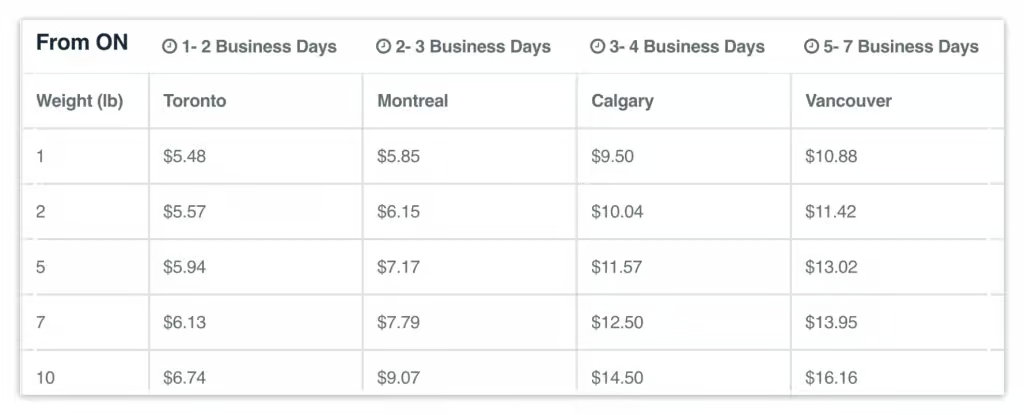
For more details, see full pricing.
Frequently Asked Questions
Why is it more expensive to ship within Canada than in the US?
Canada’s population is smaller while the area is vast. As carriers cover long distances, they reach fewer customers, which inflates shipping costs. The US, on the other hand, has denser cities and more competing carriers, which keeps carrier rates lower.
How can I reduce shipping costs in Canada as a small business?
With a shipping aggregator, you gain access to pre-negotiated carrier rates without needing high volume. If you pick the right size for your package, you can avoid DIM weight charges. Store inventory closer to the destination, and always compare rates across different carriers.
Why is shipping from the US to Canada so expensive?
When a product ships from the US to Canada, it faces fees in the form of brokerage fees, customs documentation, and import tariffs. Currency conversion and peak demand also add to the cost, bringing shipping costs from the US to Canada up.
Is there a way to get cheaper shipping rates in Canada without high volume?
Yes. Shipping aggregators and platforms that bundle sellers together can help you unlock lower carrier rates that are normally reserved for high-volume shippers, so you can get cheaper shipping rates in Canada.
Why is Canada Post shipping so expensive compared to US carriers?
Canada Post holds a near-monopoly on last-mile delivery when it comes to rural and remote areas. The US market, on the other hand, features multiple carriers competing for the same routes, which keeps prices in check. Another factor is Canada’s large area and small population, which means Canada Post faces less pressure to keep charges fair.
Does the size of my package affect shipping costs in Canada?
Yes. Dimensional weight impacts shipping costs in Canada. Dimensional weight factors in the package’s volume, not its actual weight. As a result, if a package is too large, the charges can inflate despite its weight.
What is the cheapest way to ship within Canada?
The cheapest way to ship within Canada involves multiple strategies. You can use a shipping aggregator to get pre-negotiated rates. You can pick the right size for your package to avoid paying too much due to dimensional weight. You can also compare carrier rates through comparison websites.

- Black Friday 2026: The Complete Prep Guide for E-Commerce Brands - September 28, 2026
- International Priority Shipping: The Ultimate Guide for Canadian Businesses (2026) - August 19, 2026
- How to Start Selling Online in Canada: A Step-by-Step Guide (2026) - July 29, 2026